smartcybers786@gmail.com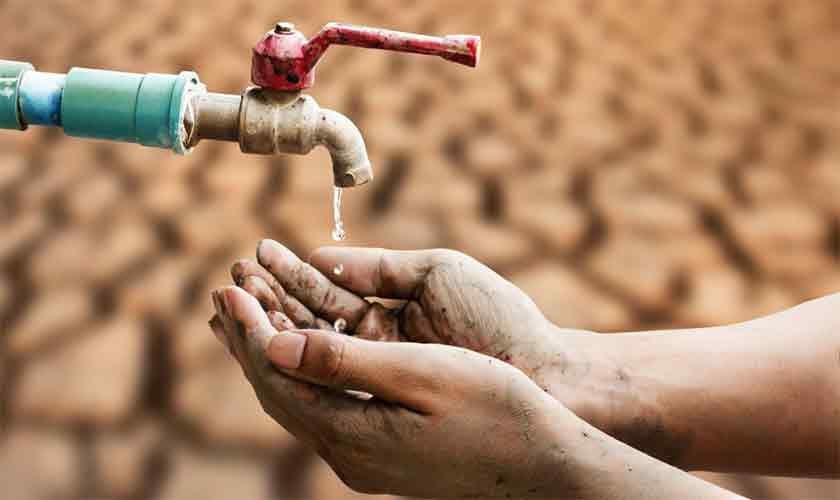
#Rethinking #water #Political #Economy
Eater deficiency is one of the environmental problems that Pakistan is facing. According to the International Institute for Sustainable Development, Pakistan is already a water-stressed country. Its population has quadrupled since 1947. Meanwhile, the country’s water storage capacity is limited to 30 days. Growing population and mismanagement of water in the agriculture sector are pushing Pakistan towards water scarcity.
Over 60 percent of the freshwater supply in this country is lost during transportation and application in agricultural sectors due to poor maintenance of irrigation systems and traditional farming practices. An austerity in the population in Pakistan has led to a sharp decline in per capita water availability. Thus, there is an urgent need for us to use innovative solutions to solve the water crisis in Pakistan. We must implement innovative solutions to transform our urban areas into water efficient places. We have to do this. What is needed Our fight against climate change will be fought in our cities. It is critical for us to prepare our cities to mitigate current and future water scarcity.
Here’s a lesson from Japan. According to a research paper from Kyoto University:
Fukuoka City in Japan experienced a severe drought in 1978. This forced the city administration to think outside the box to manage its water resources more efficiently. The city began using reclaimed water for toilet flushing. This simple and effective solution can facilitate Pakistan in increasing and minimizing water efficiency.
Municipal wastewater is treated with reclaimed water that we can use for purposes such as landscape irrigation, industrial processes and toilet flushing. The US states of California, Florida, Arizona, Texas and Nevada are already using reclaimed water to achieve better productivity and conserve water.
Assuming that each flush of a toilet uses 5 liters of water and that 100 million people in Pakistan flush their toilet only once per day. Thus, we use more than 500 million liters of water every day to get rid of human waste. In one month’s time, we will use 15,000 million (or 15 billion) liters of water just to get rid of human waste. Now imagine, if 100 million people in Pakistan used reclaimed water for toilet flushing like Fukuoka City in Japan, we could save more than 182 billion liters of water every year which could be used to reduce water scarcity.
An economically strong, climate-resilient and socially equitable Pakistan needs sufficient water for both today and tomorrow.
Rainstick Shower, a Canadian company, has developed a shower solution that is capable of using 80 percent less water and energy than conventional shower systems. A traditional shower uses about 26 gallons of water. A rain shower, however, uses only 5 gallons of water per shower while producing the same experience as an ASA conventional shower. Thus, it uses approximately 21 gallons less water per shower than a conventional shower system. In total, 100 million people showering once a day could save 2.1 billion gallons of water per day. In one year’s time, the water savings will exceed approximately 766 billion gallons of water. There are 3.7 liters in a gallon. Thus, 766 billion gallons of water would be 2.83 trillion liters of water. Adding 182 billion liters of water savings by switching to reclaimed water in toilet flushing, the collective water savings in Pakistan would exceed 3 trillion liters of water per year.
Turning off the faucet while brushing teeth alone can save 6 liters of water every minute. Now imagine, if 100 million people turned off the tap for just one minute while brushing their teeth, they could save 600 million liters of water every day and 219 billion liters of water every year.
Using reclaimed water for toilet flushing and implementing water-efficient showers can be small steps in our fight against water scarcity. However, their collective impact is tremendous. We cannot take such actions for granted. There is an urgent need for Parliament to enact laws that encourage all sections of our society to conserve water and do more with less. Water conservation is very important, as without adequate supply of water, we cannot achieve anything.
An economically strong, climate resilient and socially equitable Pakistan will need water both today and tomorrow. We should do everything we can to conserve water and get the most out of every drop.
The author is a Stockholm-based policy analyst and founder/operations manager of Project Green Earth (www.projectge.org). He can be reached at aubhamedi@yahoo.com.